
Scanily.tn - a SaaS launched solo
From idea to launch: a dynamic QR code SaaS designed, built and shipped alone, billing included.
Role · Founder - product, design, development, go-to-market
1
founder, every role
4 modules shipped, all working
modules shipped, all working
3 pricing tiers
pricing tiers
- Client
- Personal project
- Period
- 2026
- Duration
- 2 months
- Deliverables
- A live product, from sign-up to payment
- User journey and interface
- Conversion-oriented landing page
- Pricing grid and subscription billing
Context
A printed QR code is frozen: if the destination changes, the whole print run goes to waste. Tools that solve this exist, but they are sold to enterprises, at enterprise prices.
I wanted to take the problem end to end, alone, to find out what a product really costs - not the part you enjoy, the rest of it.
The problem
Small organisations need dynamic QR codes - editable after printing - without paying for tools designed for large accounts.
The promise, before sign-up
The user journey
Discovery
Users arrive through a search tied to the need, not to the product.
Sign-up
Registration kept minimal: trying comes before committing.
First QR code
A code generated and downloadable in under a minute.
Printing
The material goes to the printer with an already dynamic code.
First edit
The destination changes without reprinting - the moment the value becomes obvious.
The solution
Full design and launch solo: user journey, interface, development, pricing, billing, conversion-oriented landing page.
Every product decision was made under the constraint of a single executor - which mostly taught me what to leave out.
The product in motion
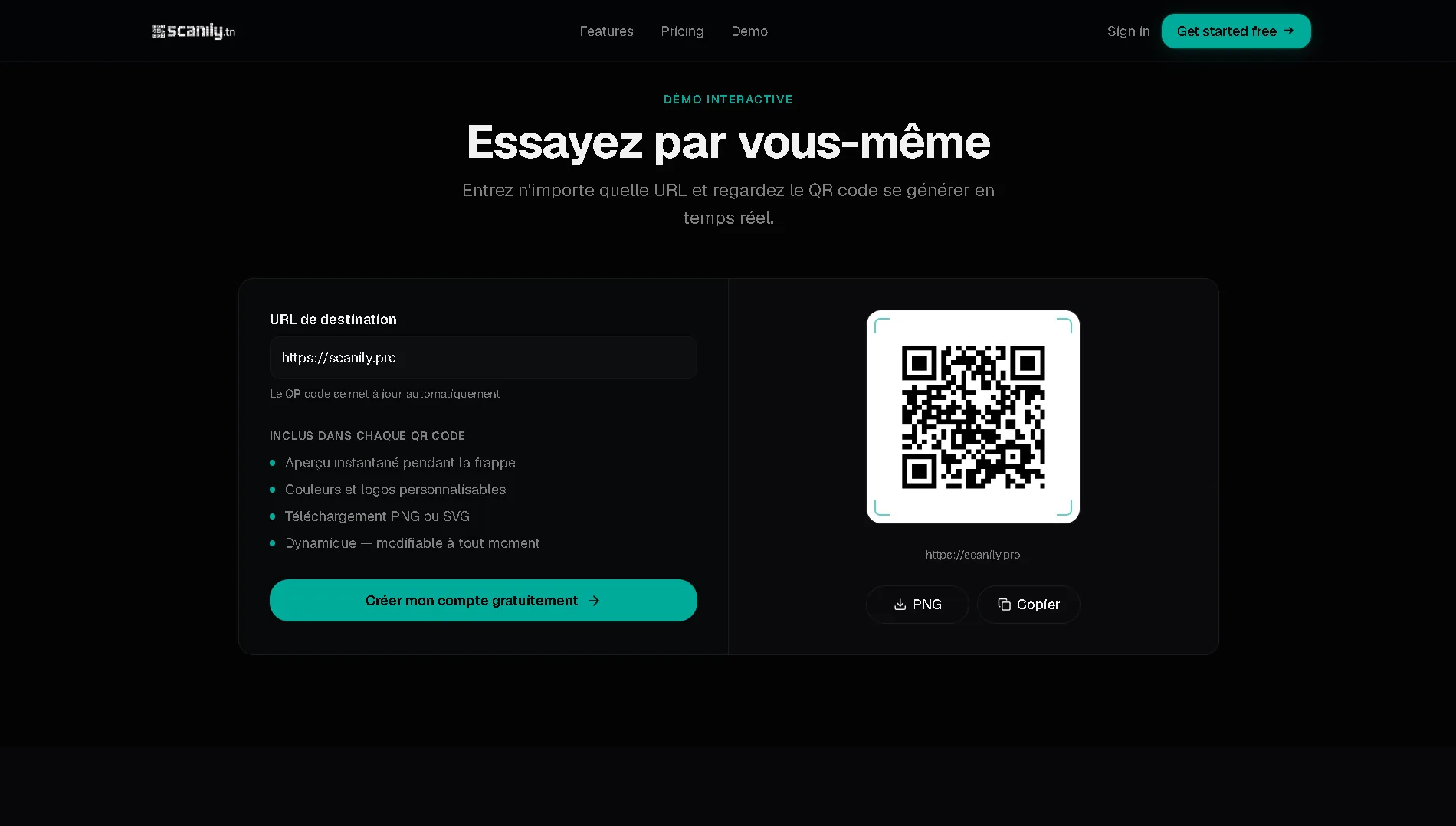
Create a code Read what it produced
Customising without breaking the code
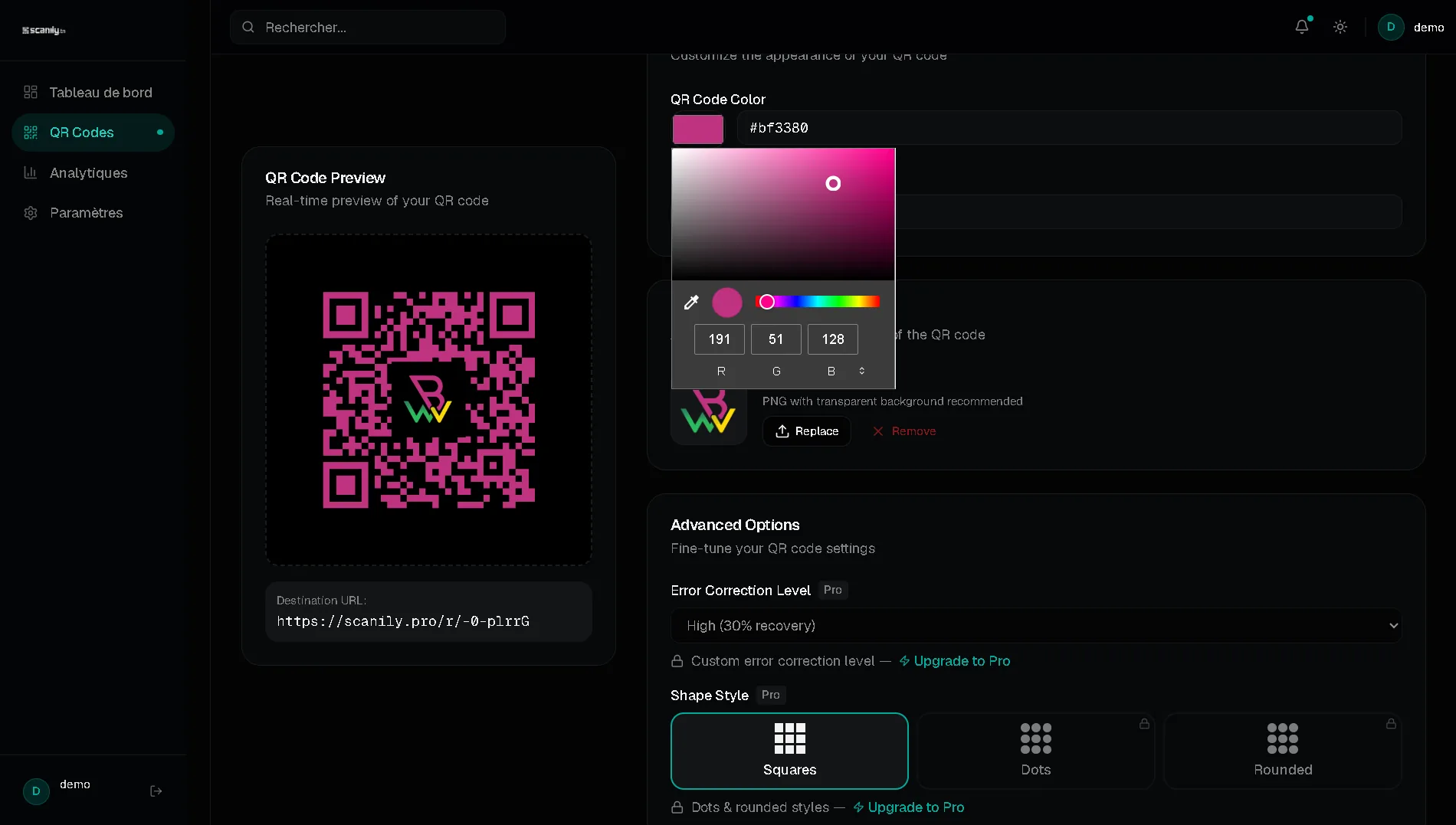
The application
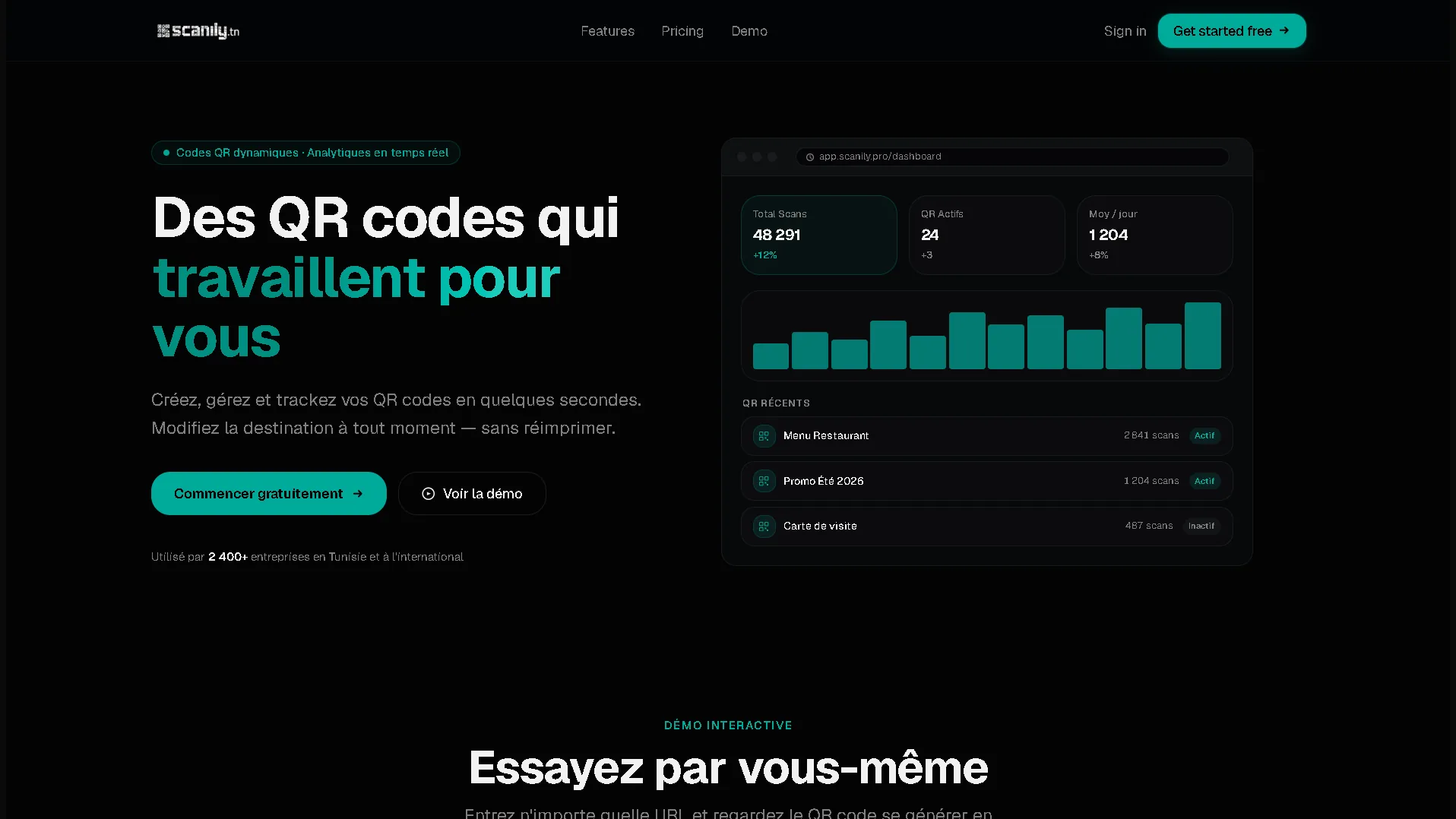
The dashboard answers one question: what happened since yesterday. Every row carries its destination, because that is what people come to change. These are a young product's numbers, and they are shown as they are. The device breakdown serves support: a code that only works in one browser shows up here.
What separates a product from a demo
Billing Notifications Account
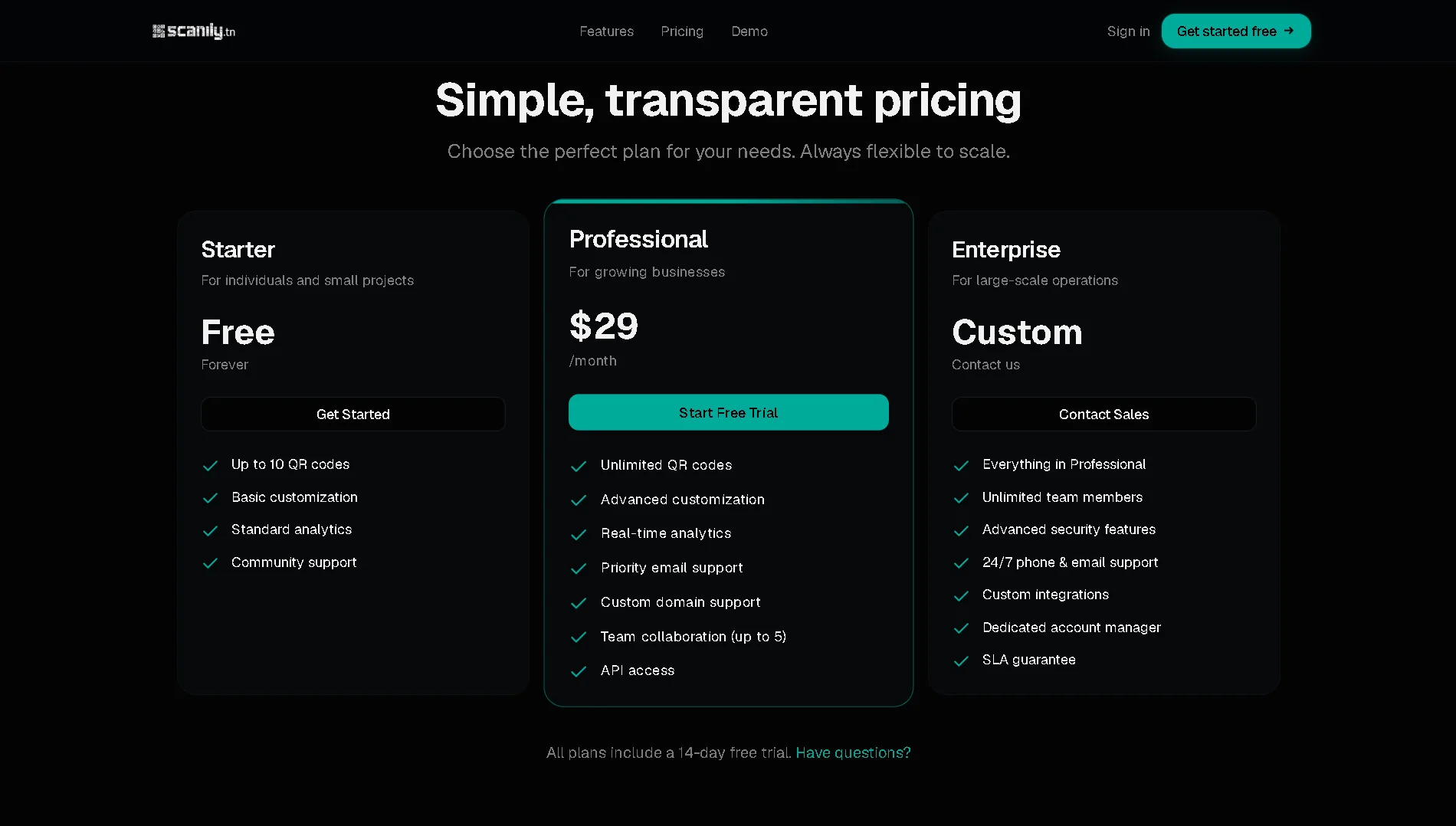
Monetisation
Thirty seconds inside the product
Results
1
founder, every role
4 modules shipped, all working
modules shipped, all working
How it was measured · Dashboard, QR codes, Analytics, Settings - the four sidebar entries, visible in the screens on this page.
3 pricing tiers
pricing tiers
How it was measured · Public grid: Starter free, Professional at $29/month, Enterprise on quote.
What I take from it
A young product owns what it is: what I take from it is the full product cycle - including the screens nobody shows and without which nothing gets paid.
Stack
- Next.js
- Supabase
- Tailwind CSS
- Stripe